


Day & night: Cancer disrupts the brain's natural rhythm
COLD SPRING HARBOR, N.Y., Dec. 15, 2025 /PRNewswire/ -- "The brain is an exquisite sensor of what's going on in your body," says Cold Spring Harbor Laboratory Assistant Professor Jeremy Borniger. "But it requires balance. Neurons need to be active or inactive at the right times. If that rhythm goes out of sync even a little bit, it can change the function of the entire brain."
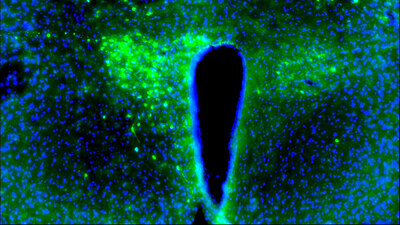
In mice, the Borniger lab has found that breast cancer disrupts the diurnal, or day-night, rhythms of corticosterone levels. Corticosterone is the primary stress hormone in rodents. In humans, it's cortisol. Typically, levels rise and fall naturally throughout the day. In breast cancer, the team found that tumors flatten corticosterone release, reducing quality of life and increasing mortality.
Disruptions to our own diurnal rhythms have been linked to stress responses like insomnia and anxiety—both common among cancer patients. The body depends on a feedback loop called the HPA axis to maintain healthy stress hormone levels. The hypothalamus (H), pituitary gland (P), and adrenal glands (A) work together to ensure regular day-night rhythms.
Borniger was surprised to find that in mice, breast cancer can disrupt those rhythms before tumors take hold. "Even before the tumors were palpable, we see about a 40 or 50% blunting of this corticosterone rhythm," he said. "We could see that happening within three days of inducing the cancer, which was very interesting."
When the team looked at the hypothalamus, they saw that key neurons were locked into a hyperactive, yet low-output state. Once the team stimulated these neurons to mimic the mouse's normal day-night cycle, regular stress hormone rhythms restarted. The adjustment pushed anti-cancer immune cells into breast tumors, causing them to shrink significantly.
Borniger explains: "Enforcing this rhythm at the right time of day increased the immune system's ability to kill the cancer—which is very strange, and we're still trying to figure out exactly how that works. The interesting thing is if we do the same stimulation at the wrong time of day, it no longer has this effect. So, you really need to have this rhythm at the right time to have this anti-cancer effect."
The team is now investigating exactly how tumors disrupt the body's healthy rhythms. Borniger hopes their work may one day help bolster existing therapies.
"What's really cool is that we didn't treat the mice with anti-cancer drugs," he says. "We're focused on making sure the patient is physiologically as healthy as possible. That itself fights the cancer. This might one day help boost the effectiveness of existing treatment strategies and significantly reduce the toxicity of many of these therapies."
About Cold Spring Harbor Laboratory
Founded in 1890, Cold Spring Harbor Laboratory has shaped contemporary biomedical research and education with programs in cancer, neuroscience, plant biology and quantitative biology. Home to eight Nobel Prize winners, the private, not-for-profit Laboratory employs 1,000 people including 600 scientists, students and technicians. For more information, visit www.cshl.edu.
 View original content to download multimedia:https://www.prnewswire.com/news-releases/day--night-cancer-disrupts-the-brains-natural-rhythm-302640342.html
SOURCE Cold Spring Harbor Laboratory