
Healthcare CIOs Urged to Build AI-Driven, Technology-First Action Plans as Uncertainty Mounts, Says Info-Tech Research Group
With regulatory shifts, rising clinical costs, and workforce shortages creating mounting challenges to healthcare stability, many organizations remain reactive instead of preparing for what comes next. Info-Tech Research Group's newly published research outlines a step-by-step plan for how industry IT leaders can use AI, automation, and FinOps to reduce risk, protect margins, and deliver more equitable and efficient care.
ARLINGTON, Va., Dec. 8, 2025 /PRNewswire/ - Healthcare organizations worldwide are facing heightened uncertainty fueled by regulatory changes, escalating cyber threats, shrinking margins, and persistent workforce shortages. To help industry leaders respond with clarity and confidence, Info-Tech Research Group, a global IT research and advisory firm, has recently published its Adapt to Uncertainty With a Technology-First Action Plan for Healthcare blueprint, which demonstrates how technology can serve as a strategic lever to manage risk, drive efficiency, and deliver equitable, patient-centered outcomes.
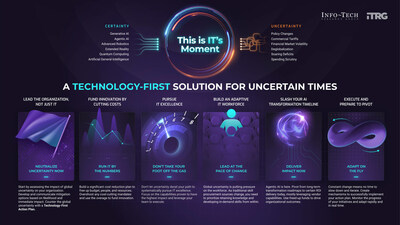
Info-Tech's latest research insights reveal that many healthcare organizations remain reactive, managing crises rather than preparing for them. Without a technology-first approach, IT teams face fragmented decisions, rising operational costs, and growing pressure to maintain clinical quality amid regulatory scrutiny. The firm's analysis shows that AI-powered claims automation, FinOps practices, cloud optimization, generative AI copilots, and privacy-preserving analytics can help leaders build resilience and turn uncertainty into organizational advantage.
"Healthcare uncertainty is inevitable, but it doesn't have to be paralyzing," says Sharon Auma-Ebanyat, principal research director at Info-Tech Research Group. "By applying a technology-first mindset, CIOs can shift from firefighting to foresight, transforming today's pressures into opportunities that strengthen patient outcomes and long-term resilience."
Info-Tech's Four Phases to Build Healthcare Resilience Through Technology
The Adapt to Uncertainty With a Technology-First Action Plan for Healthcare blueprint published by Info-Tech outlines a structured, four-phase framework that gives healthcare IT leaders the steps needed to assess risks, realign investments, and embed technology into clinical and operational workflows:
Phase 1: Assess Uncertainties and Opportunities
Executives and IT teams identify external pressures such as policy shifts, cyber risks, and demographic changes, and then map technology-driven opportunities to improve efficiency, care quality, and organizational value.
Phase 2: Review Budgets, Staffing, and Vendor Dependencies
By analyzing IT spend, workforce capacity, and vendor contracts to reduce redundancy, leaders can strengthen financial discipline and redirect investments toward modernization and AI-driven improvements.
Phase 3: Build a Technology-First Action Plan
CIOs and digital health leaders design a prioritized 12-month roadmap that aligns IT initiatives with clinical and operational priorities, with a focus on embedding AI, automation, analytics, interoperability, and risk mitigation.
Phase 4: Prepare for Execution and Adaptation
IT teams implement governance, change management, and communication structures to ensure accountability, measurable outcomes, and the ability to adjust quickly as clinical, regulatory, and operational conditions evolve.
By following the four phases outlined in Info-Tech's resource, healthcare organizations can move from reactive crisis management to proactive planning. A technology-first action plan allows CIOs to strengthen clinical operations, improve financial resilience, and enhance patient trust so that technology investments deliver measurable, long-term value across the healthcare ecosystem.
For exclusive and timely commentary from Sharon Auma-Ebanyat, an expert in the healthcare industry, and access to the complete Adapt to Uncertainty With a Technology-First Action Plan for Healthcare blueprint, please contact pr@infotech.com.
About Info-Tech Research Group
Info-Tech Research Group is one of the world's leading and fastest-growing research and advisory firms, serving over 30,000 IT, HR, and marketing professionals around the globe. As a trusted product and service leader, the company delivers unbiased, highly relevant research and industry-leading advisory support to help leaders make strategic, timely, and well-informed decisions. For nearly 30 years, Info-Tech has partnered closely with teams to provide everything they need, from actionable tools to expert guidance, ensuring they deliver measurable results for their organizations.
To learn more about Info-Tech's HR research and advisory services, visit McLean & Company, and for data-driven software buying insights and vendor evaluations, visit the firm's SoftwareReviews platform.
Media professionals can register for unrestricted access to research across IT, HR, and software, and hundreds of industry analysts through the firm's Media Insiders program. To gain access, contact pr@infotech.com.
For information about Info-Tech Research Group or to access the latest research, visit infotech.com and connect via LinkedIn and X.

 View original content to download multimedia:https://www.prnewswire.com/news-releases/healthcare-cios-urged-to-build-ai-driven-technology-first-action-plans-as-uncertainty-mounts-says-info-tech-research-group-302635679.html
SOURCE Info-Tech Research Group