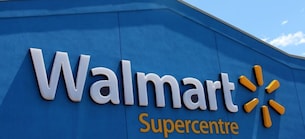

Walmart vs. Costco: Which Retail Giant Wins Today's Consumer Race?
Werte in diesem Artikel
Walmart Inc. WMT and Costco Wholesale Corporation COST are two dominant forces in global retail, each built on scale, efficiency and everyday value. Costco operates a membership-based warehouse club model, emphasizing limited assortments, bulk purchasing and razor-thin merchandise margins, with profitability supported by high membership renewal rates. The company runs more than 900 warehouses globally and continues to benefit from loyal customers seeking value and quality. Walmart, by contrast, is the world’s largest retailer, operating more than 10,750 stores worldwide across formats that include supercenters, neighborhood markets, discount stores and Sam’s Club, alongside a rapidly expanding e-commerce and digital advertising platform. Walmart serves hundreds of millions of customers weekly and leverages unmatched scale, logistics and pricing power to defend share in a competitive environment. Walmart (with a market cap of $884.2 billion) and Costco (with a market cap of about $380 billion) are worth comparing now as both navigate shifting consumer behavior, value-seeking trends and digital acceleration. This makes the case for a timely face-off between two proven, yet structurally different, retail giants.The Case for WalmartWalmart continues to strengthen its position as a leading omnichannel retailer by leveraging its vast store network for fast pickup and same-day delivery. Using stores as fulfillment hubs has improved convenience while keeping last-mile costs competitive, supporting strong e-commerce momentum. Digital sales continue to grow well ahead of the core business, driven by faster delivery, marketplace expansion and steady customer engagement across key categories.Walmart’s global e-commerce sales grew 27% in the third quarter of fiscal 2026, with U.S. e-commerce up 28% and International up 26%. Faster delivery (35% of U.S. store-fulfilled orders were delivered in under three hours), combined with improved marketplace growth and expanding digital capabilities, has helped Walmart deepen customer engagement.A major positive is Walmart’s shift toward higher-margin revenue streams. Advertising through Walmart Connect, membership income from Walmart+ and Sam’s Club and improving e-commerce economics are becoming more meaningful contributors to profits. These businesses now account for roughly one-third of consolidated adjusted operating income, helping improve earnings quality and reduce reliance on low-margin merchandise sales.Technology and automation remain central to Walmart’s strategy. Investments in AI, automated distribution and supply-chain digitization are improving in-stock levels, fulfillment efficiency and productivity. These initiatives help Walmart defend its price leadership while managing cost pressures and supporting margin stability over time.International operations provide additional growth and diversification, led by solid performance in Mexico, China and India. However, Walmart faces intense competition, thin retail margins and ongoing cost pressures. Continued investment spending, tariff exposure and uneven consumer demand, particularly among lower-income shoppers, could weigh on near-term profitability, keeping execution a key focus for investors.The Case for CostcoCostco’s strength stems from its membership-based business model, which provides stability and predictability to earnings. Membership fees generate a steady stream of high-margin revenues, while strong renewal rates reflect customer loyalty and the clear value proposition Costco offers. Combined with bulk purchasing power and a highly efficient supply chain, this model allows the company to maintain competitive pricing while protecting profitability.The company has also remained disciplined in adapting to changing consumer needs. Costco’s merchandising strategy blends everyday essentials with a limited number of unique, high-demand items, helping drive traffic and incremental spending. This focused approach, supported by data-driven decisions, has enabled Costco to expand selectively across both U.S. and international markets without adding complexity to operations.Digital performance was a notable highlight in the first quarter of fiscal 2026. Digitally enabled comparable sales rose more than 20%, supported by strong growth in website traffic and app engagement. Management emphasized that digital initiatives are helping Costco better monetize its assortment, particularly in non-food and big-ticket categories, while still reinforcing the in-warehouse shopping experience rather than replacing it.Operational efficiency remains another key advantage. Costco reported meaningful productivity gains from pre-scan technology, which improved checkout speed in warehouses. AI-driven pharmacy inventory systems helped lift in-stock levels and supported solid growth in prescription volumes. Same-day delivery offerings, enabled through partnerships with third-party platforms in the U.S. and international markets, also performed well during the quarter, extending convenience with limited capital intensity.That said, Costco continues to operate with thin merchandise margins. Wage inflation, logistics expenses and ongoing technology investments could pressure margins in the near term. In addition, demand for discretionary items may fluctuate with consumer spending trends. While Costco’s model remains highly durable, maintaining execution discipline and cost control will be key to sustaining long-term performance.How Does the Zacks Consensus Estimate Compare for WMT & COST?The Zacks Consensus Estimate for Walmart’s current fiscal-year sales and EPS suggests a year-over-year increase of 4.6% and 4.8%, respectively. The consensus estimate for EPS for the current fiscal year has risen by a penny to $2.63 over the past 30 days. The consensus mark for the next fiscal-year sales and EPS implies year-over-year growth of 4.5% and 11.6%, respectively. The consensus mark for EPS has risen by a penny to $2.94 over the past 30 days. Image Source: Zacks Investment ResearchThe Zacks Consensus Estimate for Costco’s current fiscal-year sales and EPS implies year-over-year growth of 7.5% and 11.7%, respectively. The consensus estimate for EPS for the current fiscal year has increased from $19.97 to $20.09 over the past 30 days. The consensus mark for the next fiscal-year sales and EPS suggests a year-over-year jump of 7.3% and nearly 9%, respectively. The consensus mark for EPS has risen from $21.77 to $21.89 over the past 30 days.Image Source: Zacks Investment ResearchWMT & COST: A Look at Past-Year Stock PerformanceOver the past year, shares of Walmart have rallied 19.7% against Costco’s decline of 10.8%. Based on recent performance, Walmart appears to be the stronger pick.Image Source: Zacks Investment ResearchWMT vs. COST: Valuation SnapshotWalmart currently trades at a forward price-to-earnings multiple of 38.19, which is above its median level of 35.98. Meanwhile, Costco carries a forward 12-month P/E of 41.38, notably below its one-year median of 49.44. From a valuation perspective, Costco looks relatively more attractive right now. Although its absolute multiple remains higher than Walmart’s, the stock is priced below its recent historical average, indicating a modest valuation discount compared with its norms.Image Source: Zacks Investment ResearchWMT vs. COST: Which Is the Better Bet Now?Both Walmart and Costco are industry-leading retailers, but they appeal to different investor priorities. Walmart’s scale, omnichannel strength and growing higher-margin businesses give it a clearer edge in the current environment, where convenience, speed and value are driving consumer behavior. Costco remains a fundamentally strong, long-term compounder backed by its membership model and operational discipline, though near-term performance may hinge more on execution and cost control. All said, Walmart appears to be the stronger bet right now for investors seeking momentum and earnings diversification, while Costco remains a compelling long-term hold for those focused on stability and consistency.Walmart and Costco both currently carry a Zacks Rank #3 (Hold). You can see the complete list of today’s Zacks #1 Rank (Strong Buy) stocks here.Zacks Naming Top 10 Stocks for 2026Want to be tipped off early to our 10 top picks for the entirety of 2026? History suggests their performance could be sensational.From 2012 (when our Director of Research Sheraz Mian assumed responsibility for the portfolio) through November, 2025, the Zacks Top 10 Stocks gained +2,530.8%, more than QUADRUPLING the S&P 500’s +570.3%.Now Sheraz is combing through 4,400 companies to handpick the best 10 tickers to buy and hold in 2026. Don’t miss your chance to get in on these stocks when they’re released on January 5. Be First to New Top 10 Stocks >>Want the latest recommendations from Zacks Investment Research? Today, you can download 7 Best Stocks for the Next 30 Days. Click to get this free report Walmart Inc. (WMT): Free Stock Analysis Report Costco Wholesale Corporation (COST): Free Stock Analysis ReportThis article originally published on Zacks Investment Research (zacks.com).Zacks Investment ResearchWeiter zum vollständigen Artikel bei Zacks
Übrigens: Costco Wholesale und andere US-Aktien sind bei finanzen.net ZERO sogar bis 23 Uhr handelbar (ohne Ordergebühren, zzgl. Spreads). Jetzt kostenlos Depot eröffnen und Neukunden-Bonus sichern!
Ausgewählte Hebelprodukte auf Costco Wholesale
Mit Knock-outs können spekulative Anleger überproportional an Kursbewegungen partizipieren. Wählen Sie einfach den gewünschten Hebel und wir zeigen Ihnen passende Open-End Produkte auf Costco Wholesale
Der Hebel muss zwischen 2 und 20 liegen
| Name | Hebel | KO | Emittent |
|---|
| Name | Hebel | KO | Emittent |
|---|
Quelle: Zacks